Affiliates program
 Login
Login


YATEO supports advertisers in implementing high-performing Google Ads strategies, relying on advanced tracking that complies with regulatory requirements. Drawing on deep expertise, this Google Ads agency helps marketing teams improve the reliability of conversion tracking and optimize advertising campaigns while fully respecting users’ choices. Yves shares his perspective here on the responsible use of Google Ads.
As an advertiser, you may be wondering how to optimize Google Ads without breaching rules related to user consent. Good news: advertising performance and responsible data usage can go hand in hand. As long as the right tools and best practices are adopted, it is entirely possible to reconcile marketing effectiveness, regulatory compliance and user trust. Here is the demonstration.
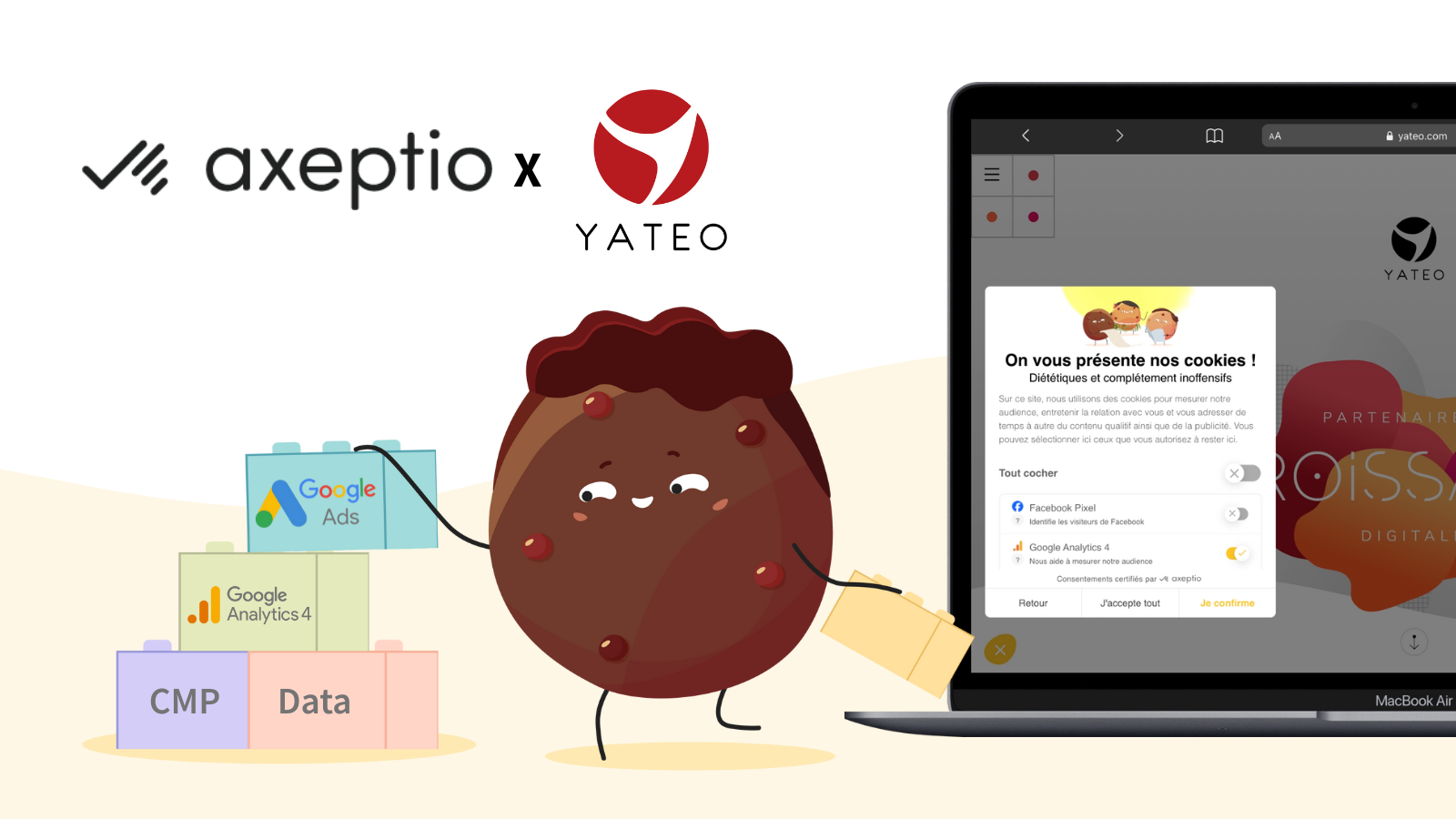
Why has user consent become essential for Google Ads?
With the entry into force of the GDPR and the proliferation of similar regulations around the world, user consent has now become a central pillar of any Google Ads strategy.
In Europe, any collection or use of data for advertising purposes requires consent that is freely given, specific, informed and unambiguous. Today, this framework is no longer limited to the European Union: regulations such as Law 25 in Quebec, the CCPA in the United States, or the nFADP in Switzerland illustrate the emergence of comparable requirements at an international level, forcing advertisers to adapt their practices within an increasingly demanding regulatory environment.
For teams in charge of Google Ads, these changes have a direct impact on campaign management. The absence of consent limits access to key data such as revenue conversion tracking or average basket value, sales attribution, as well as granular performance analysis by page or by audience. These restrictions directly affect ad personalisation, real-time optimization capabilities and, ultimately, the overall performance of advertising setups.
Integrating consent from the campaign design stage makes it possible to optimize Google Ads in a sustainable and responsible way.
Google Consent Mode v2: how does it work?
Consent Mode v2 is designed to help advertisers manage user consent across Google’s tools.
When consent is not granted, certain tags restrict data collection while still sending anonymised signals that can be used to model missing data and conversions. These estimates are generated using machine learning, based on consented signals and behavioural patterns observed by Google.
This approach makes it possible to maintain a strong level of optimization in Google Ads while strictly respecting user consent, without compromising performance analysis. Bids, audiences and advertising messages can therefore be effectively adjusted.
Best Practices for Optimizing Google Ads with User Consent in Mind
The first step is to implement a compliant CMP, properly connected to Google Ads and Google Tag Manager, so that tag firing can be precisely controlled based on the user’s choices. Particular care must be taken when implementing Consent Mode v2, as its configuration determines Google Ads’ ability to model conversions when consent is not granted.
The key steps and benefits of effective Google Ads optimization include:
- checking consent statuses directly in the Google Ads interface,
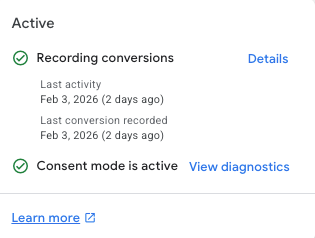
- monitoring modeled conversions,
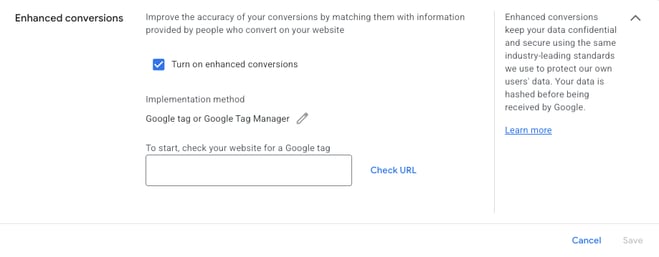
- analysing the recovery of attribution signals,
- setting up dedicated dashboards to compare observed and modeled performance.
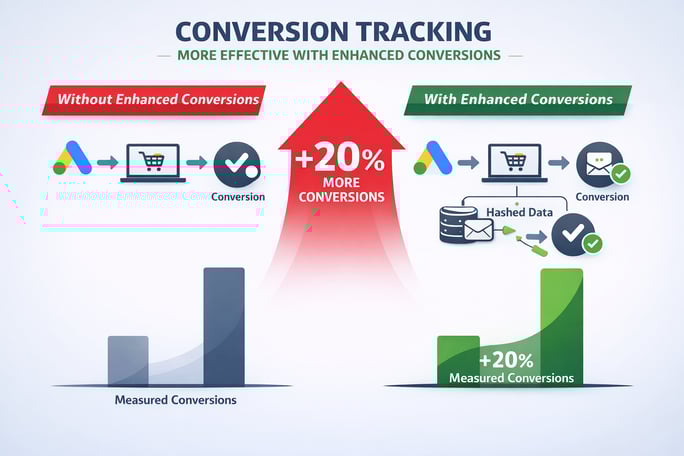
Advanced conversion tracking, data modelling and ongoing performance analysis therefore become key optimization drivers. These topics, at the crossroads of regulation, technology and marketing strategy, require specific expertise. Google Ads specialists such as YATEO can support teams in putting these best practices into place, securing campaigns while maximising their effectiveness in an environment that respects user consent.
YATEO helped Havas Voyages increase Google Ads conversions by 204%, thanks to a reconfiguration of tracking and more effective campaign management. Responsible tracking and a well-structured approach to Google Ads campaign management (targeting segmentation, optimization of strategic keywords, audience diversification and monitoring, regular A/B testing, etc.) also enabled Hertz Antilles to see its Google Ads ROI increase by +296%. These case studies show that advertising performance and respect for user consent are fully compatible." — Yves Attias, CEO of Yateo.
Why does a consent-respectful Google Ads strategy strengthen long-term performance?
Respecting user consent is a real driver of long-term business sustainability. Google regularly emphasises the importance of responsible advertising practices, whether in terms of user protection, data quality or transparency in advertising setups.
From this perspective, approaches that follow these principles are more likely to align with Google’s criteria for content quality and reliability, notably through concepts such as EEAT (Experience, Expertise, Authority, Trust), which are increasingly present across the marketing and advertising ecosystem.
From an operational standpoint, a consent-respectful strategy supports higher-quality data coming from genuinely engaged users. This improved signal quality allows Google Ads algorithms to optimize ad delivery more precisely over the long term, while limiting biases linked to incomplete or degraded data.
By combining transparency, technical expertise and an understanding of algorithmic mechanisms, advertisers can build more stable and resilient performance, in line with the platform’s future developments.