Affiliates program
 Login
Login


The design of your consent banner has a direct impact on its performance. Whether it is the length of the copy, the tone of voice, how intrusive the format feels, or the choice of a video over an image, every design decision affects interaction, consent, and opt-in rates.
With the launch of its native A/B testing feature, Axeptio now enables users on Enterprise and Agency plans to test different banner versions simultaneously, measure their performance, and choose the design that delivers the best user experience and the highest volume of activatable data. Here is a closer look at this new feature, now available for both Axeptio for Brands and Axeptio for Publishers in our latest edition of Product Lab.
Why A/B Testing is Becoming a Key Optimization Lever for Your CMP
Until now, optimizing a consent banner usually meant taking an iterative approach: launch an initial version, then refine it over time by updating the design, adjusting the messaging, or changing how it appears, before comparing it with an earlier version.
But that method has clear limitations. When performance is compared across different time periods, it becomes difficult to isolate the real impact of the changes made on the CMP design. Traffic fluctuations, active campaigns, seasonality — all of these variables can distort the results.
That is exactly what Axeptio’s new A/B testing feature is designed to solve.
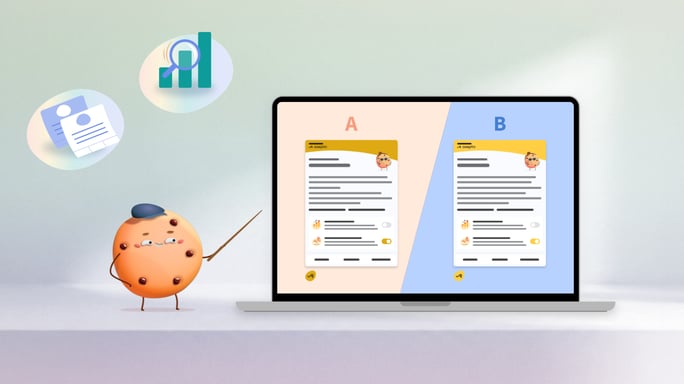
By randomly showing two versions of a banner to comparable user segments, this approach makes it possible to isolate the impact of each variation. And when it comes to a CMP, there is no shortage of variables worth testing.
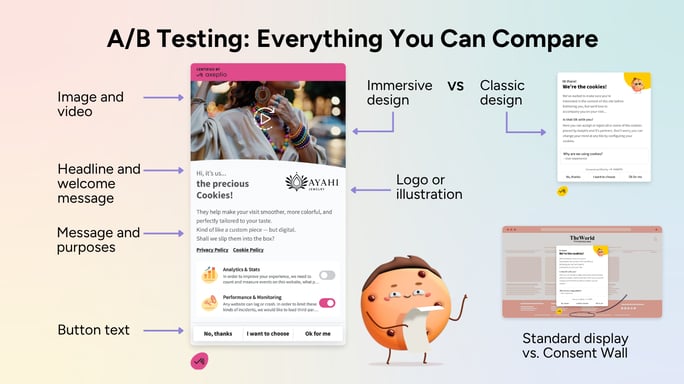
Display format, for example, plays a crucial role. A banner shown immediately does not trigger the same behavior as a message that appears after scrolling or after a few seconds of browsing. In the same way, a consent wall does not generate the same level of interaction as a more discreet banner displayed in the bottom-left corner of the screen.
The content itself is also a key factor. The length of the message, the way legal purposes are explained, the tone of voice used — all of these elements shape the user’s ability to understand what is at stake and make an informed choice. Then there are the visual elements: a static image, a cookie illustration, a brand logo, or even an embedded video in the banner, which can do more to capture the visitor’s attention.
“In a time of consent fatigue, when users keep seeing similar banners across the web, these design optimizations really matter. A better-designed banner can make the difference between a reflex rejection or acceptance and meaningful engagement with the brand through the CMP." — Antoine Martinez, Chief Product Officer at Axeptio
A/B testing is what allows you to answer these questions: what is the real impact of a new design on opt-in rate? Does a video generate more interactions with the CMP? Does a more educational message reduce bounce rate? Over time, these insights make it possible to identify the banner that performs best for your audience.
Find everything you can test in the infographic below:
The Axeptio Back Office Now Includes a Native A/B Testing Feature
With this new feature, Axeptio makes A/B testing directly accessible from its back office, for both Axeptio for Brands and Axeptio for Publishers.
A new option has been added to the left-hand drop-down menu, giving you access to a page that centralizes all of your campaigns.
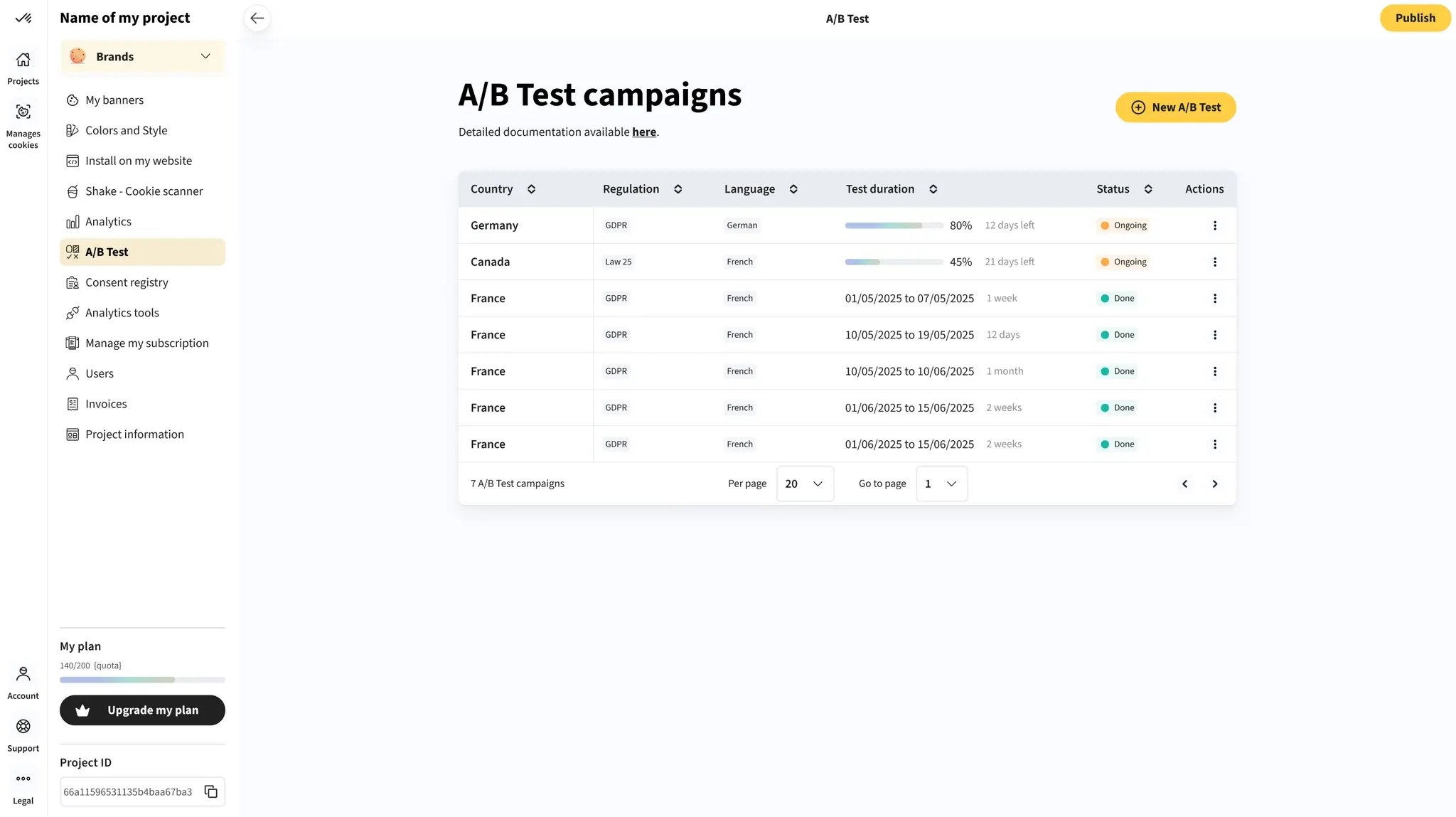
This is where you will find both ongoing and completed campaigns, along with the banner types concerned in each case (country, language, and regulation) as well as the defined duration and campaign status. This consolidated view makes it easier to run multiple experiments across your different sites and audiences.
How Do You Create an A/B Testing Campaign with Axeptio?
The setup process has been designed to be quick and simple. It works in three steps. First, make sure you have already created the two banners you want to test simultaneously in the “My banners” section.
Then go to the A/B test tab. The next step is to define the scope by choosing the type of banner involved in the test (Brands or TCF) followed by the country, regulation, and language.
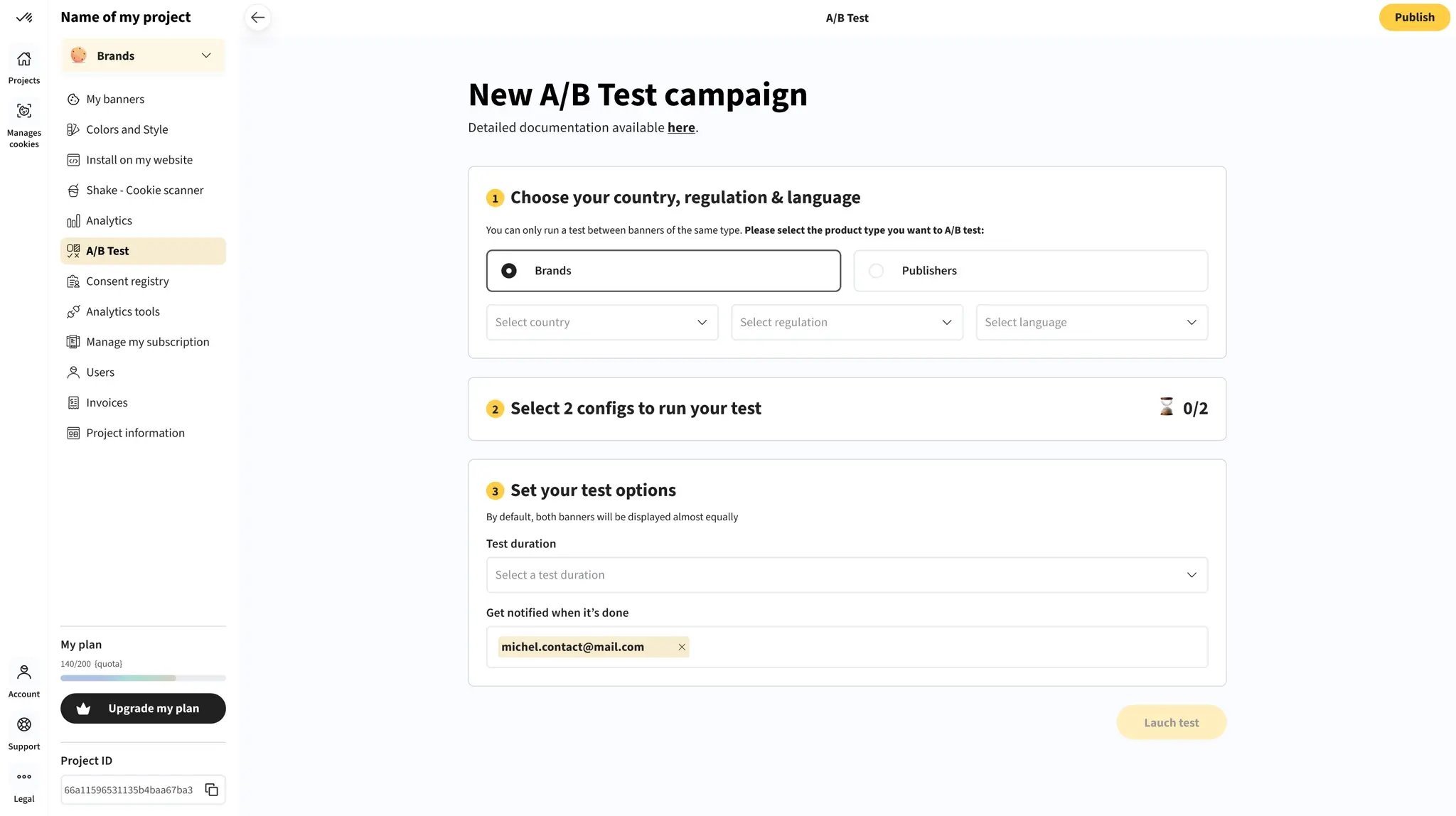
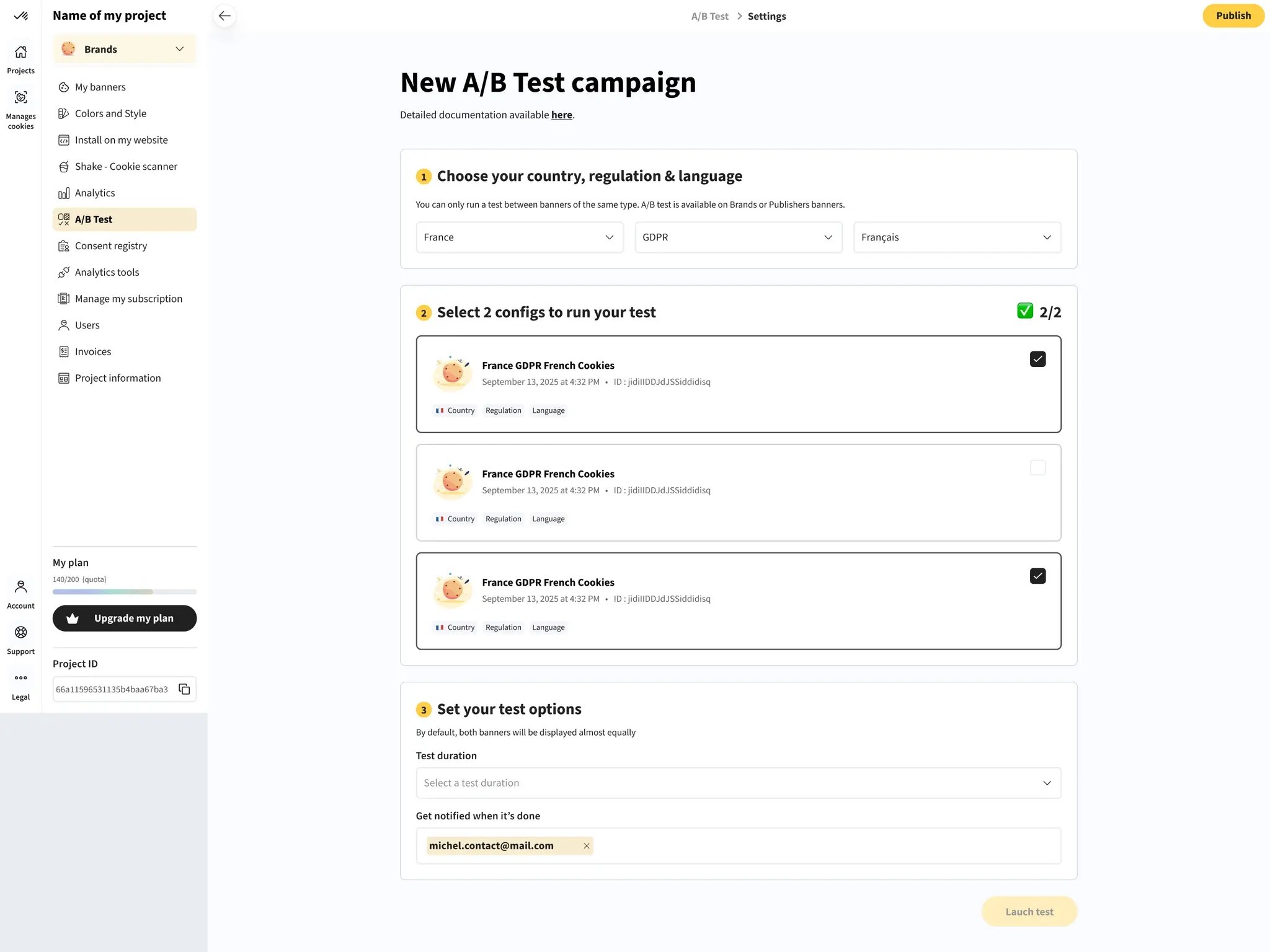
Based on these criteria, the back office automatically suggests compatible banners from across all your projects.
You can then select the two banners you want to compare.
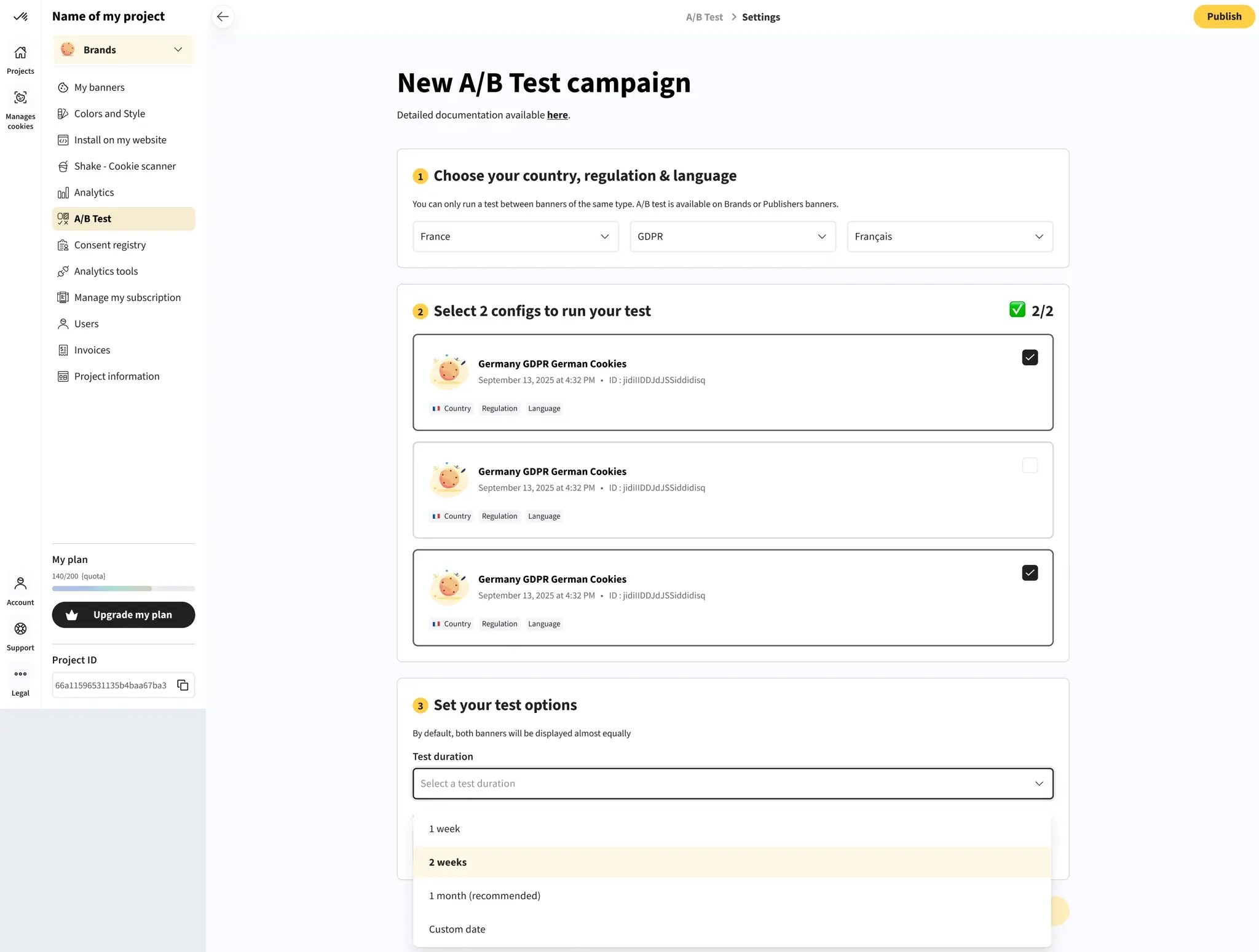
The final step is to set the campaign duration. Axeptio offers several preset options (one week, two weeks, or one month, with one month recommended for statistically meaningful results) as well as the option to define a custom duration. You can also enter email addresses to automatically receive the results once the test is complete.
To ensure the reliability of the analysis, a few usage rules apply. First, some banners may be unavailable during selection if they are not live or if they are already being used in another campaign.
Second, a banner that is part of an active test cannot be modified while the campaign is running. A specific label makes those banners easy to identify.
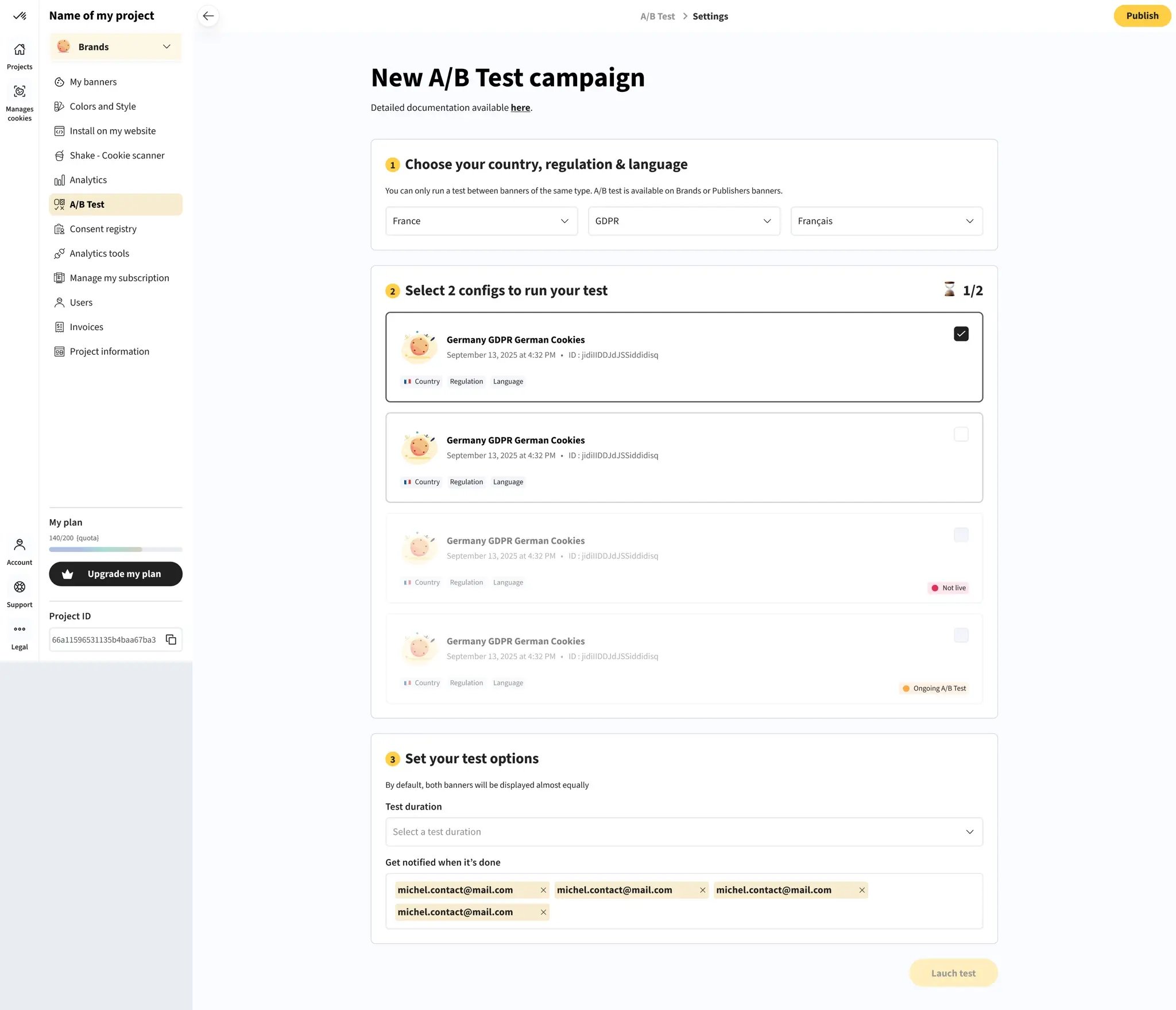
Finally, alerts notify the user if there are not enough available banners to launch a test.
Comparative Results and Recommendations to Guide Your Strategic Decisions
Once a campaign is live, results can be accessed directly from the back office, including in real time for tests that are still running. This allows you to track performance without having to wait until the end of the defined test period.
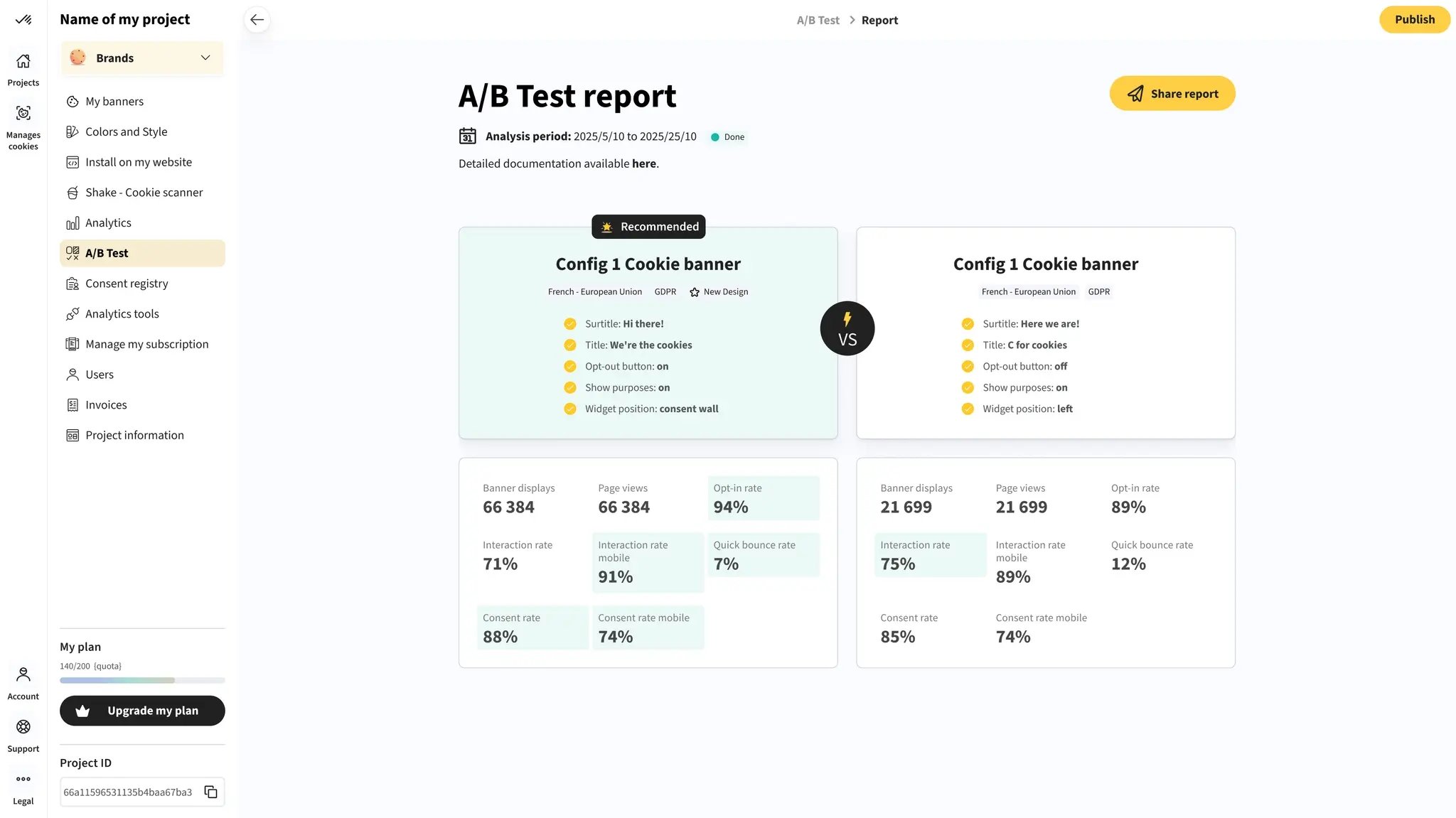
Each campaign includes a detailed side-by-side comparison of the two banners. The measured KPIs include impressions and page views, interaction rate, consent rate, opt-in rate, and quick bounce rate.
“The interface highlights in green the KPIs where each banner performs best, and even recommends a winning banner. This decision-support feature enables marketing teams to make faster, clearer calls at the end of a campaign.” — Thomas Balester, Product Marketing Manager at Axeptio
Thanks to A/B testing, teams can now refine their strategy over time and build banners that perform better and better for their audience. The CMP becomes a genuine marketing optimization lever, driven by data.
When developing websites, we’re always looking for ways to stay ahead for our clients. A/B testing has shown us that consent management isn’t all the same, UI and UX directly impact opt-in rates. More opt-ins mean more actionable data to better target, understand, and grow your audience while improving the user experience. Every opt-in is a signal of trust, understanding, and permission to grow.”— Blake Wisz, Chasing Creative, Agency Founder and beta tester for Axeptio's new features