Affiliates program
 Login
Login


Audience analysis, journey personalization, performance measurement, campaign optimization: each depends on the quality of the data collected. In this context, consent performance determines how many reliable signals teams can use to fuel their analyses and guide decisions.
Axeptio has redesigned the analytics available from its back office to help marketing and acquisition teams better assess the performance of their consent management.
With richer dashboards, clearer visualizations, and dedicated analytics for opt-out-based regulations, the update gives teams a sharper view of how consent affects the user experience.
This Product Lab also looks back at the latest changes to Axeptio’s geolocation features, Country Groups and Targeted Areas, which allow teams to tailor the consent experience more precisely to different regulatory frameworks.
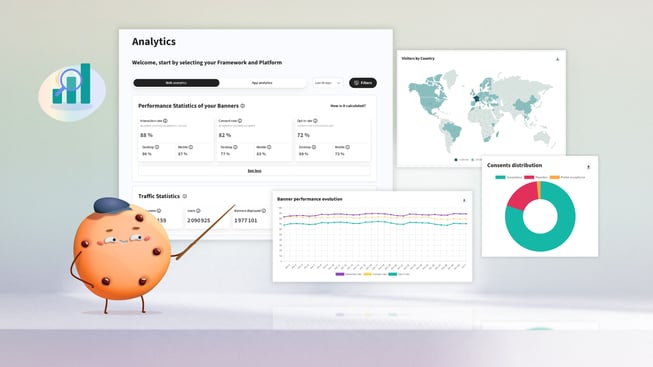
A Clearer View of Consent Performance Across Markets
The dashboards in Axeptio’s analytics page now adapt to the regulatory framework and environment teams want to analyze.
Users can choose between an opt-in or opt-out consent model, while also separating data from websites, mobile apps, and Headless environments.
The three main KPIs remain at the heart of the interface:
- The interaction rate measures the share of visitors exposed to the CMP who make a choice, whether they accept, refuse, or customize their preferences. It helps teams assess the visibility of the banner and its ability to draw attention.
- The consent rate measures the proportion of visitors who accept processing among those who have interacted with the CMP. It serves as an indicator of trust, but also of how clearly users understand the purposes presented to them.
- The opt-in rate compares the number of consents obtained with the total number of visitors exposed. For marketing, acquisition, and data teams, this is often the most strategic KPI, as it directly determines the volume of actionable data available for analysis, journey personalization, or targeting.
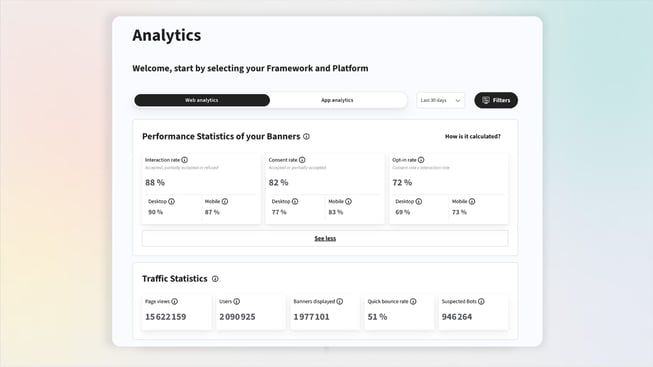
The new version of the analytics dashboard also retains its more traffic-focused indicators: number of visitors, volume of banners displayed, quick bounce rate, and estimated bot traffic. This last metric helps identify the share of automated traffic that may distort the actual volume of addressable users.
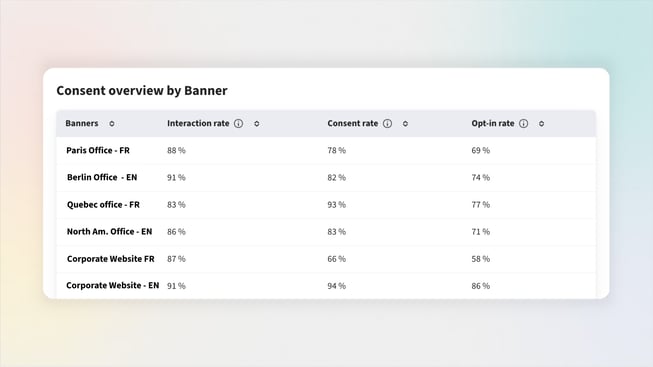
The redesign also brings a clearer visual experience. Banner performance is now presented in a summary table that shows, at a glance, the interaction, consent, and opt-in rates for each configuration. Teams also get a new chart showing how page views evolve over time. The objective remains the same: to make it easier to spot the trends that influence consent performance.
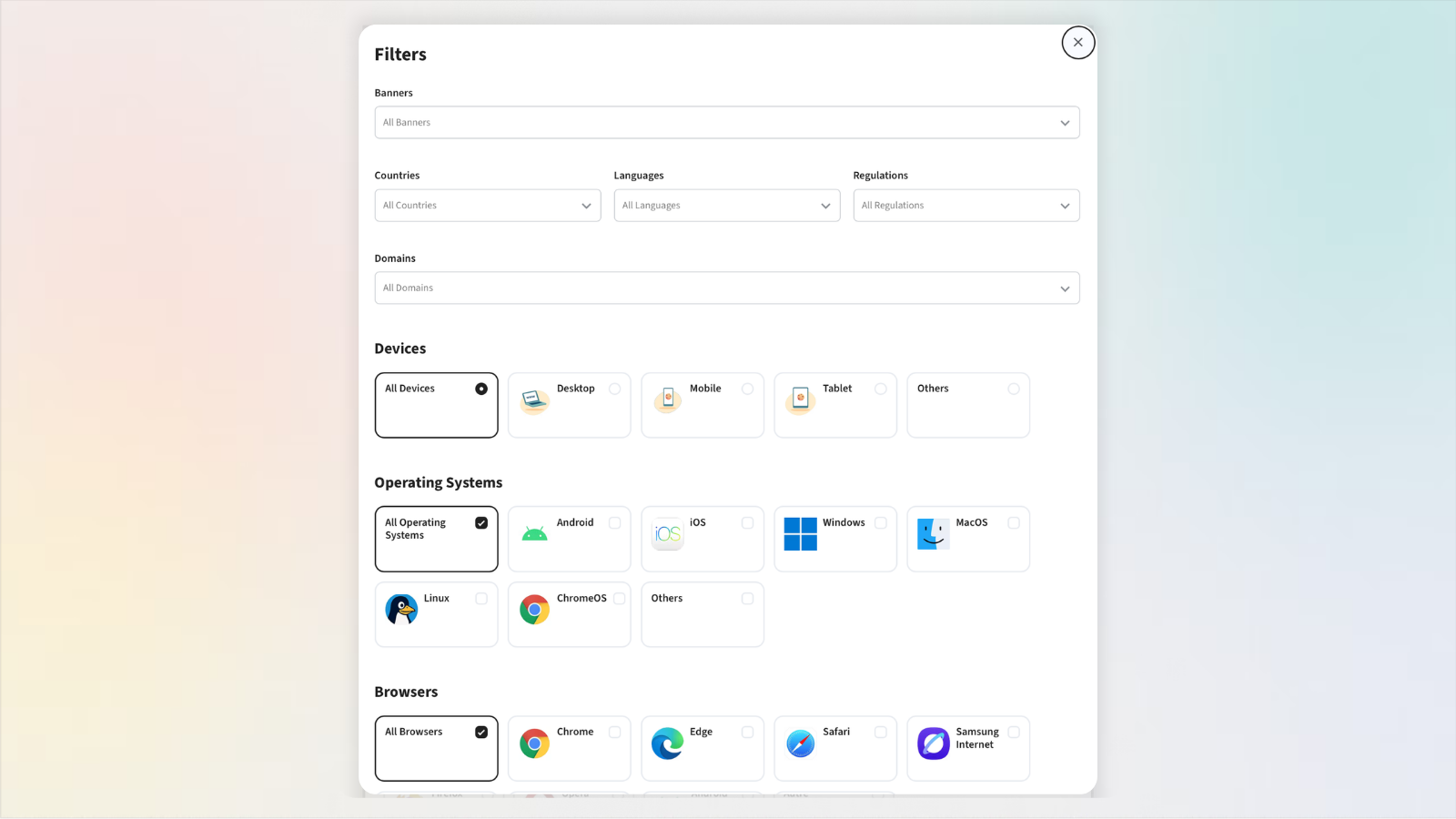
 The visual redesign also extends to the dashboard filters, which have been completely refreshed to make navigation between analysis criteria more intuitive. Device views are now illustrated with dedicated icons, while operating systems and browsers are identified using their respective logos. A new Regulation tab has also been introduced alongside the existing Country and Language filters, allowing teams to segment analytics by regulatory framework and compare consent performance across different compliance models.
Why Opt-out Regulations Call for Different Analytics
The main change in Axeptio’s redesigned analytics dashboard is the arrival of new metrics dedicated to opt-out models.
Historically, consent KPIs have been built around regulations such as the GDPR, where users must give explicit consent before any data processing can take place. In this context, teams mainly track interaction, consent, and opt-in rates to assess their ability to collect actionable data.
But as audiences become more international, and as regulations differ from one market to another, this analysis is not always the most relevant. Regulations such as the CCPA in the United States follow a different logic. Data may be collected by default, while users have the right to object, either through the CMP or via a dedicated opt-out mechanism such as a “Do Not Sell or Share My Personal Information” link.
The right indicators are therefore not exactly the same. This is why Axeptio is introducing an Analytics space designed specifically for opt-out models. Teams can track the breakdown between acceptance and objection, as well as how these behaviors change over time.
In particular, the dashboard distinguishes between refusals made manually by visitors through the CMP and objections sent automatically via Global Privacy Control, or GPC, a privacy signal increasingly used across the North American ecosystem.
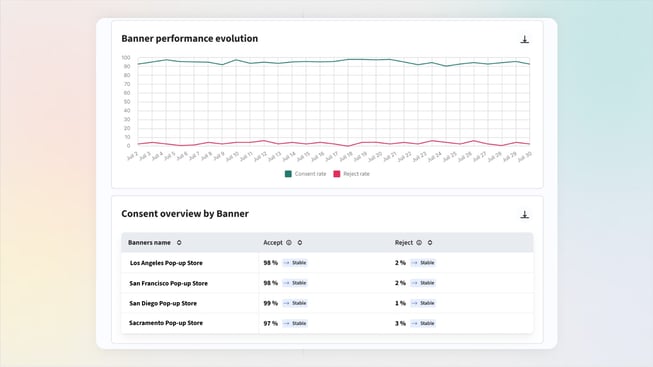
This distinction gives teams a more accurate view of visitor behavior and helps them verify that refusal mechanisms remain accessible and are actually being used when regulation requires them.
Adapting Banners to Local Rules, from Europe to North America
In a second phase, the redesign will introduce a new Visitors by Country map, giving teams a global view of where their traffic comes from. They will be able to quickly identify the main markets in their audience and measure how exposed their activity is to different regulatory frameworks.
This geographical view builds on the latest developments in Axeptio’s geolocation features.
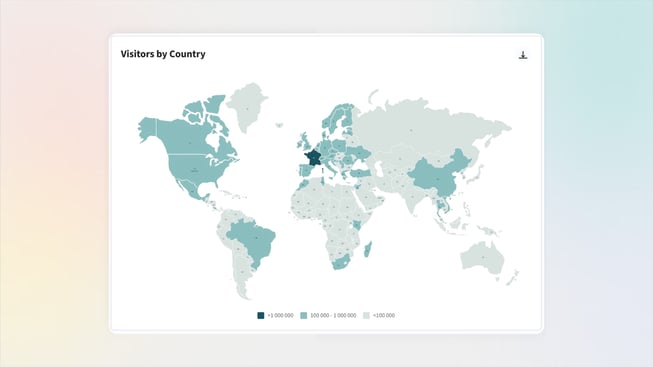
With Country Groups, a single configuration can now be linked to several countries or predefined geographic areas. This gives teams more flexibility when deploying consistent consent strategies at scale. Targeted Areas add a further level of granularity, particularly useful in North America. Teams can target specific US states covered by dedicated regulations, distinguish Quebec from the rest of Canada, or create regional groups tailored to their business.
“Take the example of a company operating mainly in Europe and North America. It can display a GDPR-compliant banner for European visitors, a configuration adapted to Law 25 for Quebec, a specific opt-out experience for the United States, and a separate setup for the rest of Canada. Axeptio automatically detects the visitor’s location and applies the appropriate configuration,” concludes Pierre Gagnon Gingras, Customer Success Manager at Axeptio.