Affiliates program
 Login
Login


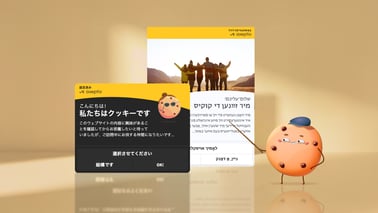
The Axeptio widget is now available in 37 languages, ten of which read right to left: Arabic, Dhivehi, Hebrew, Kashmiri, Pashto, Persian, Sindhi, Urdu, Uyghur and Yiddish.
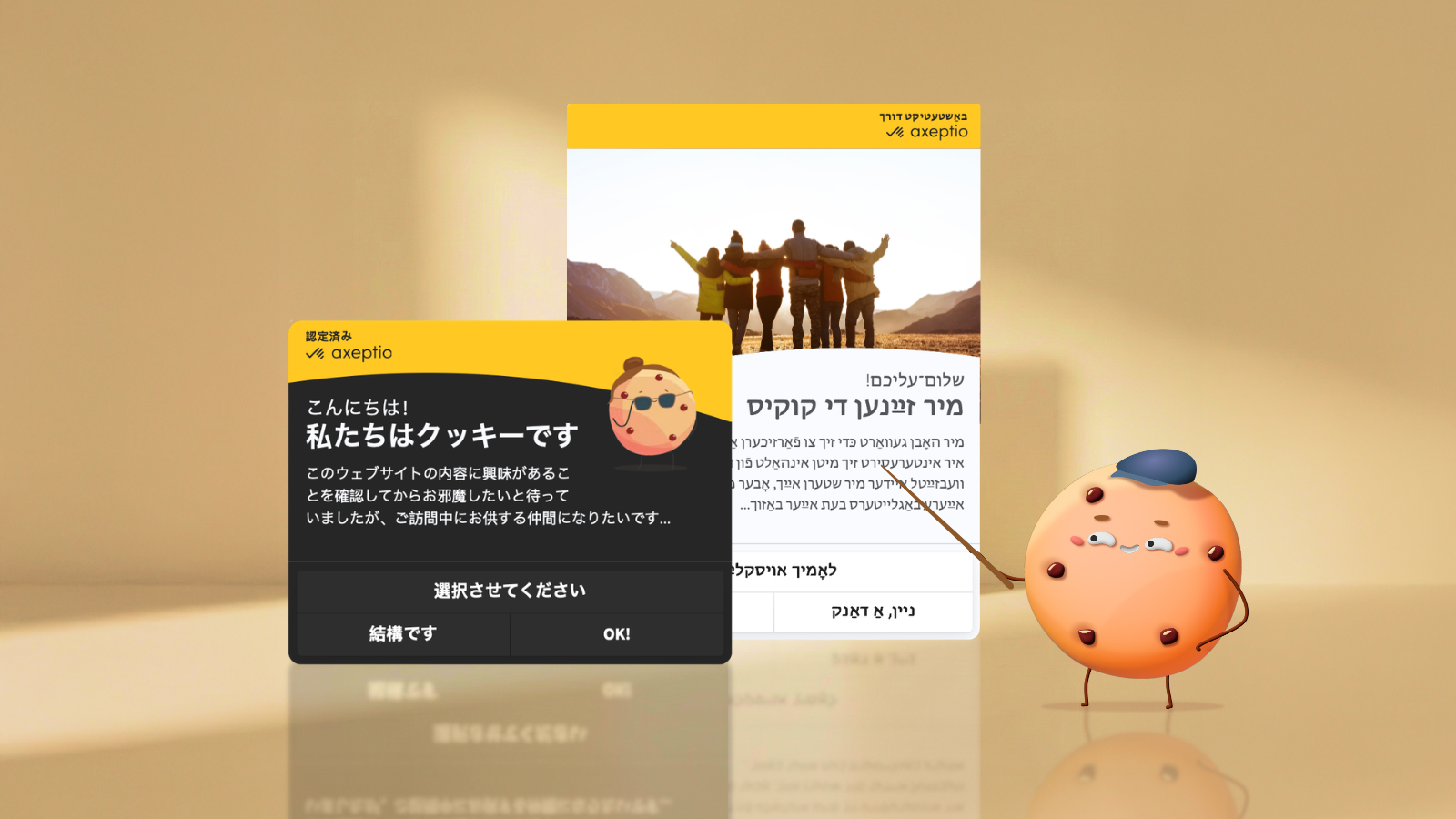
Change the reading direction and you change the interface. On a right-to-left site, the whole widget is mirrored: the text, but also the buttons, the toggles and the illustrations. The "Accept" button moves to the other side.
This works on both the old and the new widget design, and the same release adds support for Chinese, Japanese and Korean scripts.
37 Languages, 250 Countries and the Configurations that Come with Them
Consent is rarely a single-market problem. The Axeptio back office now holds configurations for 250 countries and the regulatory frameworks that apply to them.
The 37 available languages make it possible to match the experience to an international audience: Arabic, Bulgarian, Chinese, Croatian, Czech, Danish, Dhivehi, Dutch, English, Estonian, Finnish, French, German, Greek, Hebrew, Hungarian, Irish, Italian, Japanese, Kashmiri, Korean, Latvian, Lithuanian, Maltese, Pashto, Persian, Polish, Portuguese, Romanian, Sindhi, Slovak, Slovenian, Spanish, Swedish, Urdu, Uyghur, Yiddish.
For a good share of Axeptio customers, this is daily business. FIBA runs consent across 212 national federations, 214 countries, 6 mobile apps and 4 websites. Cairn.info serves 1.2 million readers in more than 70 countries. Netatmo runs twelve language and regional configurations: French, English, German, Italian, Spanish, Dutch and Portuguese, plus French variants for Quebec and Switzerland, and English variants for the rest of Canada, the UK and the US.
When Your Banner is All Greek to Your Audience
International customers keep floating the same shortcut: set everything to English by default and the banner gets easier to maintain. That shortcut has a price.
On Belgian traffic between 10 August and 8 September 2026, opt-in reached 58.3% when the widget language matched the visitor's browser language, against 49.2% when it did not.
Most of the gap sits in interaction rather than in the decision itself. When the languages match, 76.5% of visitors interact with the widget, against 65.7% when they don't.
Browser language points the same way: 58.7% average opt-in on French-language browsers, 54.4% on Dutch, 49.0% on English.